Presentation Details
Kelvin Bridge Structure Based TSV Test for Weak Faults
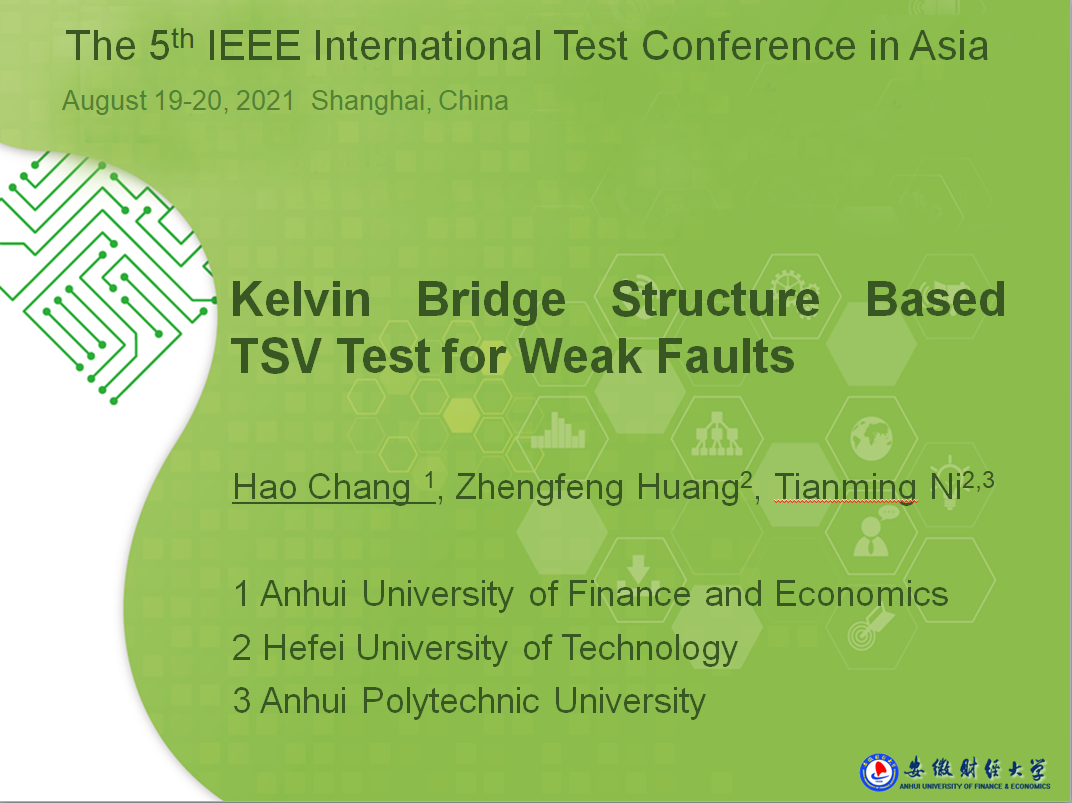
Start Time:2021-08-19 20:20(Asia/Shanghai)
Duration:20min
Session:SS Special Session »
Tips: Only the registered participant can access the file. Please sign in first.
Abstract
challenges. Most of the existing test methods are suffer from the test resolution and difficult to detect weak faults. Borrowing the wisdom of Kelvin Bridge, a non-invasive test method is proposed to detect resistive open fault and leakage fault. By adjusting the resistances on the bridge arm to make them change in equal proportion, the adverse effects of contact resistance and parasitic resistance on the wire can be eliminated. HSPICE simulation using 45 nm CMOS technology show that it can successfully detect resistive open fault above 0.1 Ω and leakage fault below 10 MΩ. The effectiveness of the test scheme is further proved by process-voltage-temperature (PVT) analysis.
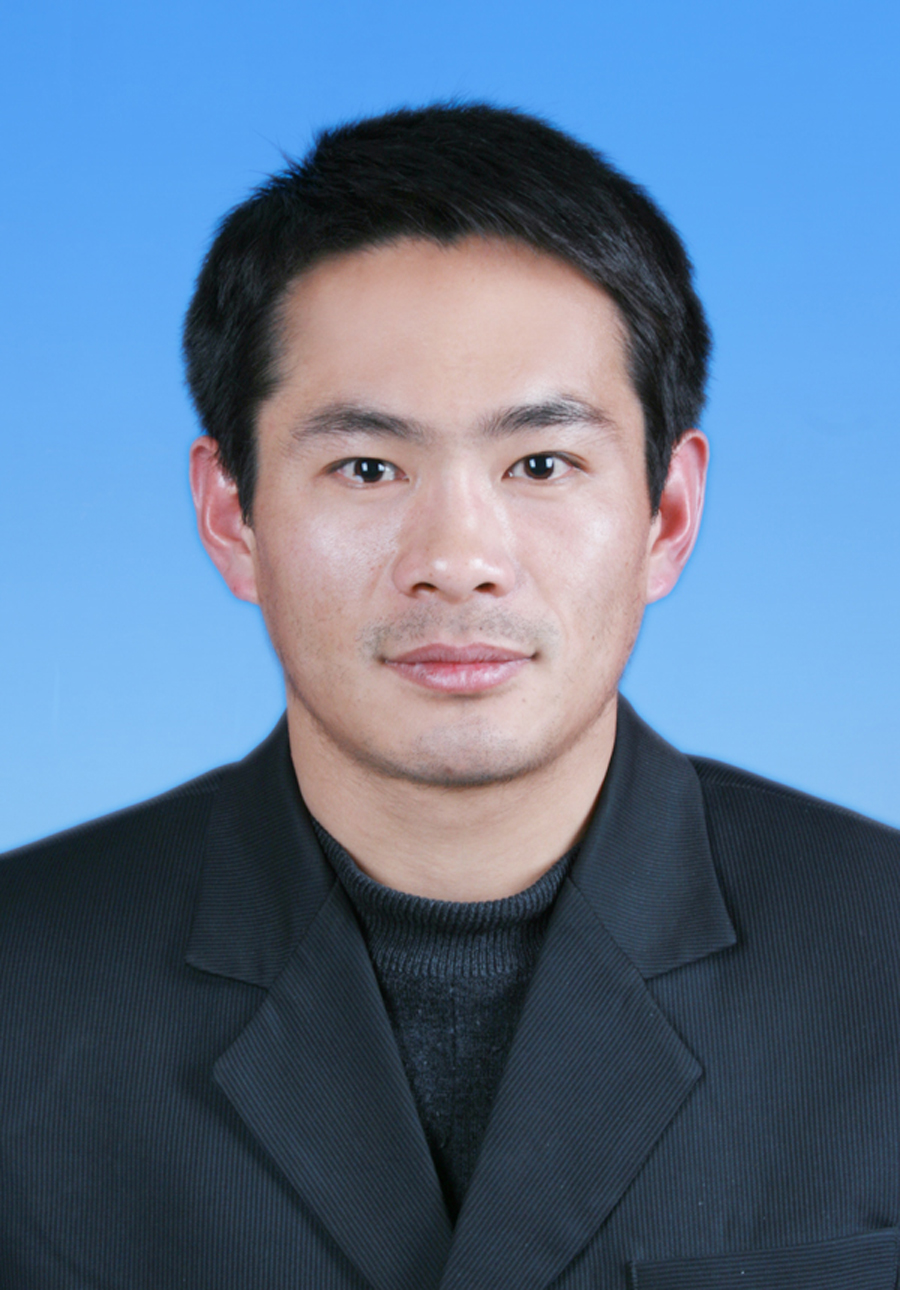
HAO CHANG was born in 1983 in China. He received B. S. in computer science and technology from Anhui University of Finance & Economics, Bengbu, China, in 2004. He received the M. S. and Ph.D. degree in computer science from Hefei University of Technology, Hefei, China, in 2007 and 2015, respectively. Now He is an associate professor in Department of Computer Science and Technology, Anhui University of Finance and Economics, Bengbu, China. Currently, his research interests cover 3D ICs integration and test, built-in self-test and fault tolerance.
Keywords
Speaker
Hao Chang
Anhui University of Finance & EconomicsHAO CHANG was born in 1983 in China. He received B. S. in computer science and technology from Anhui University of Finance & Economics, Bengbu, China, in 2004. He received the M. S. and Ph.D. degree in computer science from Hefei University of Technology, Hefei, China, in 2007 and 2015, respectively. Now He is an associate professor in Department of Computer Science and Technology, Anhui University of Finance and Economics, Bengbu, China. Currently, his research interests cover 3D ICs integration and test, built-in self-test and fault tolerance.
All Comments
Important Date
-
Conference Date
Aug 18
2021
toAug 20
2021
-
May 10 2021
Draft paper submission deadline
-
Aug 16 2021
Early Bird Registration
-
Aug 19 2021
Contribution Submission Deadline
-
Aug 20 2021
Registration deadline
Sponsored By
Tongji University
Chinese Computer Federation
Organized By
Contact Information
- Prof. Zhang Ying
- yi******@tongji.edu.cn
Previous Conferences
-
2022-08-24 Taiwan, China Taipei
2022 IEEE International Test Conference in Asia -
2019-09-03 Japan Tokyo
2019 IEEE International Test Conference in Asia -
2018-08-15 China
2018 IEEE International Test Conference in Asia -
2017-09-13 Taiwan, China Taipei
2017 IEEE International Test Conference in Asia -
2014-11-10 China 杭州市
IEEE International Test Conference in Asia

Submit Comment