Presentation Details
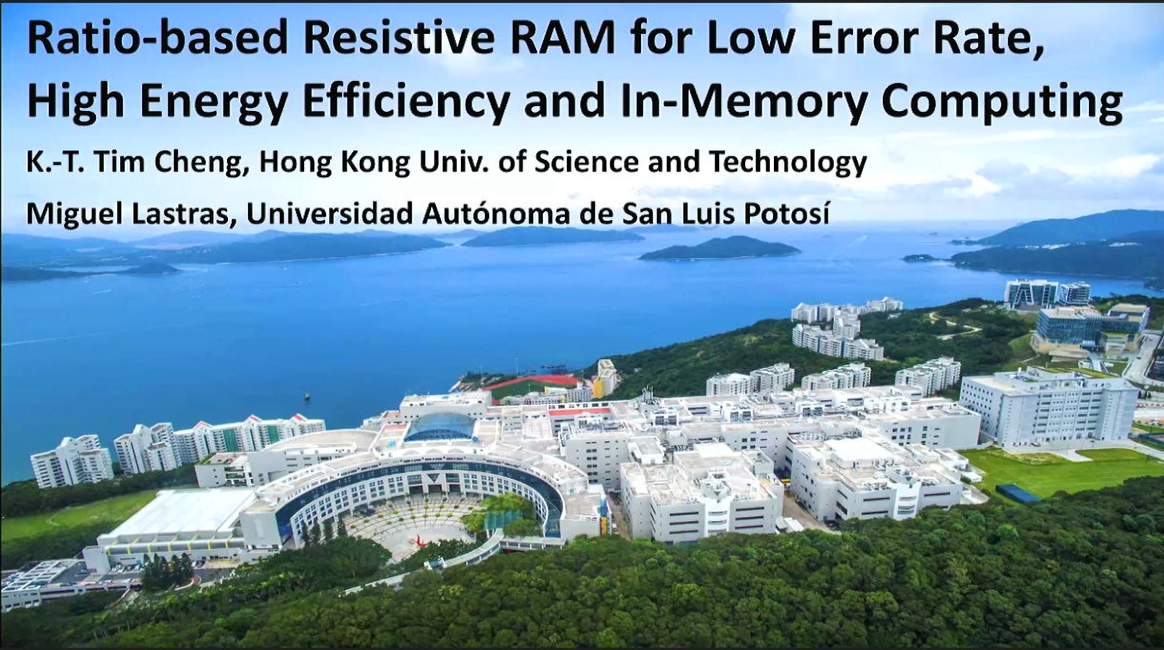
Ratio based Resistive RAM for Low Error Rate, High Energy Efficiency and In-Memory Computing
ID:7
View Protection:ATTENDEE
Updated Time:2021-08-23 19:39:32
Hits:639
Keynote speech
Start Time:2021-08-20 09:00(Asia/Shanghai)
Duration:45min
Session:PS Plenary Session(Openning, Keynotes 1-6) »
Video
No Permission
Tips: Only the registered participant can access the file. Please sign in first.
Abstract
In this talk, we will present the concept and mechanism of ratio-based encoding for resistive memory cells, in which the resistance ratio of a pair of resistance-switching devices, rather than the resistance of a single device (i.e. resistance-based encoding), is used for encoding the information. This encoding significantly reduces the bit error probability of ReRAM memory cells. Applicable to both single-level and multi-level memory cells, we demonstrate the advantages of the ratio-based encoding over the resistance-based encoding for designing robust ReRAM systems. We experimentally validated the findings on multiple resistance-switching devices and show that, compared to the resistance-based encoding on the same resistive devices, the proposed approach achieves up to 3 orders of magnitude lower bit error probability, or alternatively it could reduce the cell’s programming time and programming energy by 5–10X , while achieving the same bit error probability. With greater robustness and reliability, ratio-based ReRAM also serves as a promising candidate for in-memory computing.
Keywords
Speaker
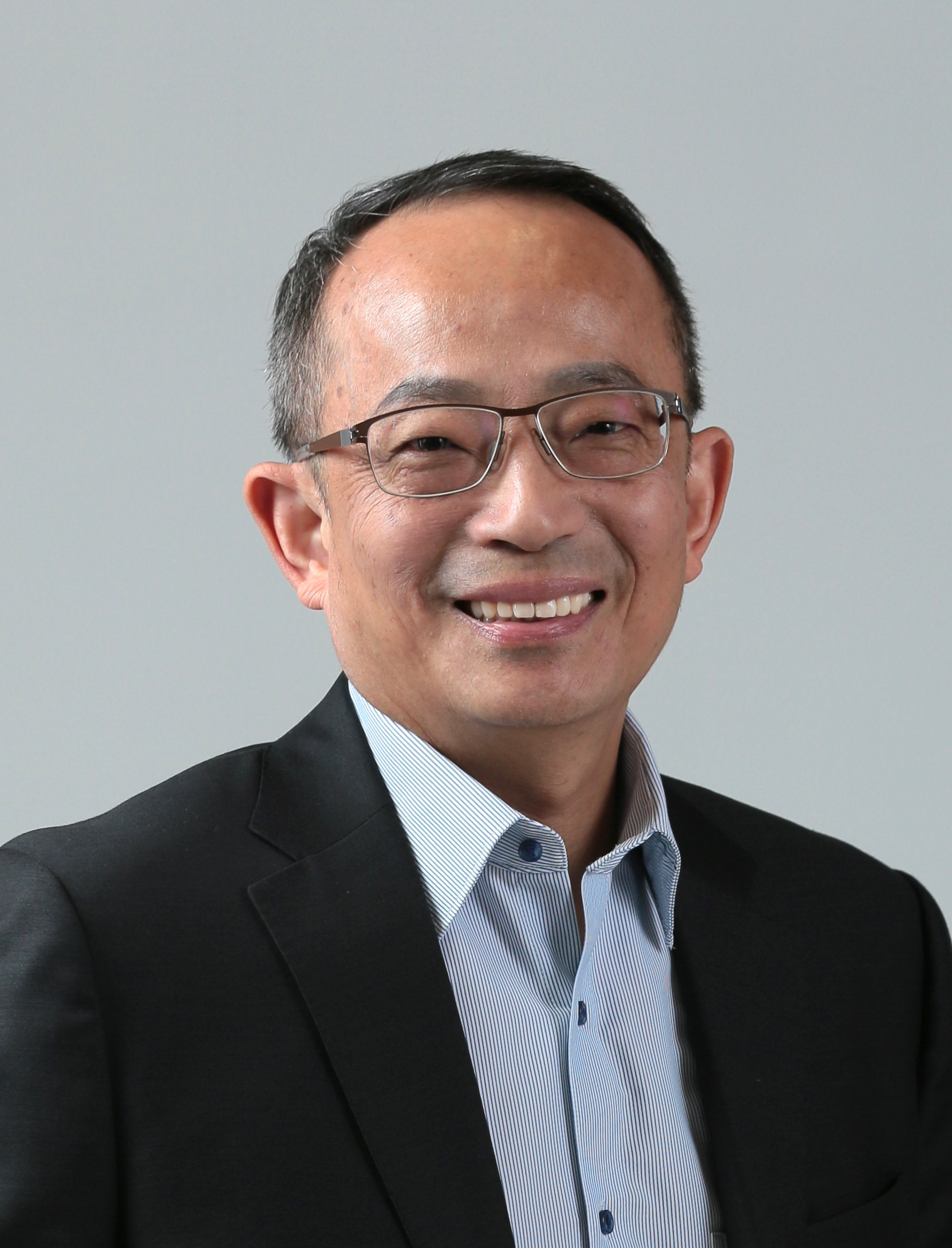
K-T. Tim Cheng
Professor Hong Kong University of Science and Technology|
Prof. Tim Cheng Hong Kong , University of Science and Technology
|
Cheng, an IEEE fellow and a fellow of Hong Kong Academy of Engineering Sciences a, received 10+ Best Paper Awards from various IEEE and ACM conferences and journals. He has also received UCSB College of Engineering Outstanding Teaching Faculty Award, Pan Wen Yuan Outstanding Research Award, 2020, and Fellow of School of Engineering, The University of Tokyo. He served as Editor-in-Chief of IEEE Design and Test of Computers and was a board member of IEEE Council of Electronic Design Automation’s Board of Governors and IEEE Computer Society’s Publication Board.
All Comments
Important Date
-
Conference Date
Aug 18
2021
toAug 20
2021
-
May 10 2021
Draft paper submission deadline
-
Aug 16 2021
Early Bird Registration
-
Aug 19 2021
Contribution Submission Deadline
-
Aug 20 2021
Registration deadline
Sponsored By
IEEE
Tongji University
Chinese Computer Federation
Tongji University
Chinese Computer Federation
Organized By
Tongji University
Contact Information
- Prof. Zhang Ying
- yi******@tongji.edu.cn
Previous Conferences
-
2022-08-24 Taiwan, China Taipei
2022 IEEE International Test Conference in Asia -
2019-09-03 Japan Tokyo
2019 IEEE International Test Conference in Asia -
2018-08-15 China
2018 IEEE International Test Conference in Asia -
2017-09-13 Taiwan, China Taipei
2017 IEEE International Test Conference in Asia -
2014-11-10 China 杭州市
IEEE International Test Conference in Asia

Submit Comment